
Master Cookie Authentication, Claims-Based Identity, and Policy-Based Authorization in ASP.NET Core 10.
Perhaps you’re taking on more responsibility, focusing on compliance, or know you’ll need to upgrade the security of your systems. You want to know they’re secure, why, and know there’s a solid yet flexible foundation for you and your team to build on. If so, this course is for you!
Building secure web applications is essential in today’s digital landscape. This instructor-led course provides a comprehensive foundation in authentication and authorization for ASP.NET Core 10, teaching you how things work under the hood before you adopt higher-level libraries like ASP.NET Core Identity or external providers like OAuth and OpenID Connect.
Duration
2 days
Level
Intermediate
Language
English, Swedish
To get the most from this course, you should have:
After completing this course, you will have the skills and confidence to implement secure authentication and authorization in your ASP.NET Core applications. Specifically, you will be able to:
When taking the authentication and authorization in ASP.NET Core workshop, you’ll receive:
This course focuses on local authentication using cookies and the core ASP.NET Core authentication and authorization infrastructure.
You’ll learn cookie authentication, claims-based identity, the authentication middleware, and both basic and advanced authorization patterns.
This course does not cover external authentication providers (Google, Facebook, Microsoft), OAuth 2.0, OpenID Connect, or ASP.NET Core Identity. These topics build upon the fundamentals taught in this course and are covered in our other courses.
To learn OpenID Connect and OAuth, see our Introduction to OpenID Connect and OAuth course.
This course assumes you have basic ASP.NET Core knowledge. If you’re new to ASP.NET Core, we recommend taking our ASP.NET Core fundamentals course first. However, no prior authentication or security experience is required.
This course uses ASP.NET Core 10 and .NET 10. The concepts and patterns taught apply to earlier versions as well, though some API details may differ.
You can definitely still attend. The foundations of authentication and authorization have remained stable across recent versions. Most concepts (cookies, claims, and policies) apply directly to .NET 6-9. We will highlight the few areas where .NET 10 introduces specific API changes or new features.
Understanding cookie authentication gives you the foundation to work effectively with any authentication system.
ASP.NET Core Identity and OAuth/OIDC providers are all built on top of the authentication and authorization primitives you’ll learn in this course. This knowledge helps you debug issues, customize behavior, and make informed architectural decisions.
This is an instructor-led course, available either as in-person classroom training or as a live online session. You’ll have direct access to the instructor for questions and discussions throughout the course.
Yes, we offer private team sessions where the content can be adjusted to focus on topics most relevant to your organization. Contact us to discuss your specific needs.
Yes, this course includes an extensive set of hands-on exercises integrated throughout each module. After most topics, you’ll complete practical exercises that let you apply what you’ve just learned. More than half of the course time is dedicated to this hands-on work, ensuring you leave with real, applicable skills rather than just theoretical knowledge.
You will need a .NET development environment capable of running ASP.NET Core 10 (such as Visual Studio or an equivalent .NET IDE) and an HTTP/HTTPS debugging proxy.
The course demonstrations and exercises assume the use of Fiddler Classic (Windows) for inspecting authentication traffic. If you are using macOS or Linux, you can follow the course using an alternative proxy tool; see the macOS/Linux FAQ for details and limitations.
The course and hands-on exercises assume the use of Fiddler Classic (Windows) for inspecting HTTP/HTTPS traffic. If you use a different HTTP debugging proxy, you should still be able to follow along, as the underlying concepts and workflows are the same.
Common alternatives include Fiddler Everywhere (commercial, with a trial), Charles Proxy, Proxyman, and HTTP Toolkit. Please note that tool-specific support for these alternatives cannot be provided.
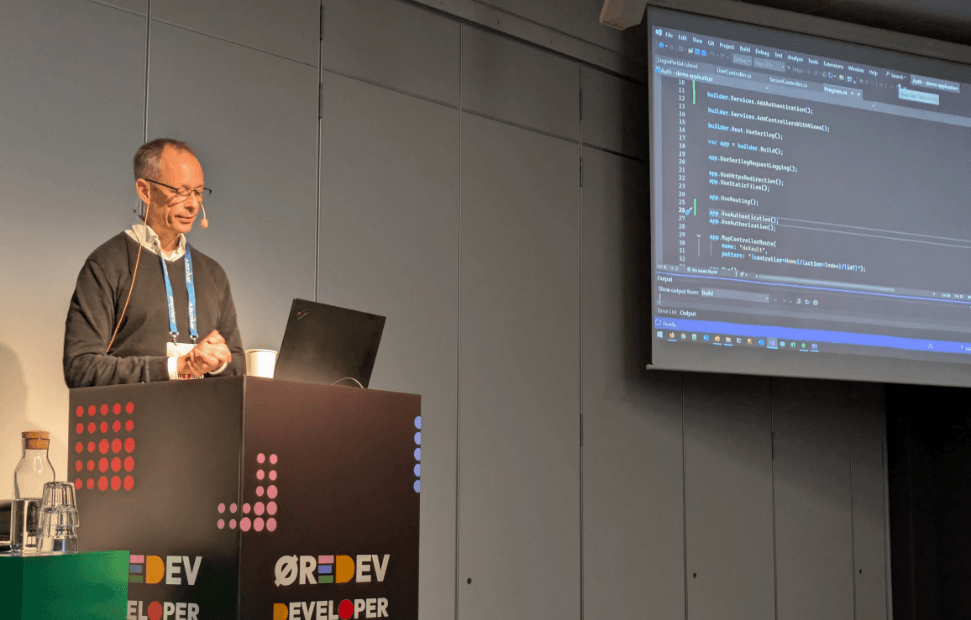
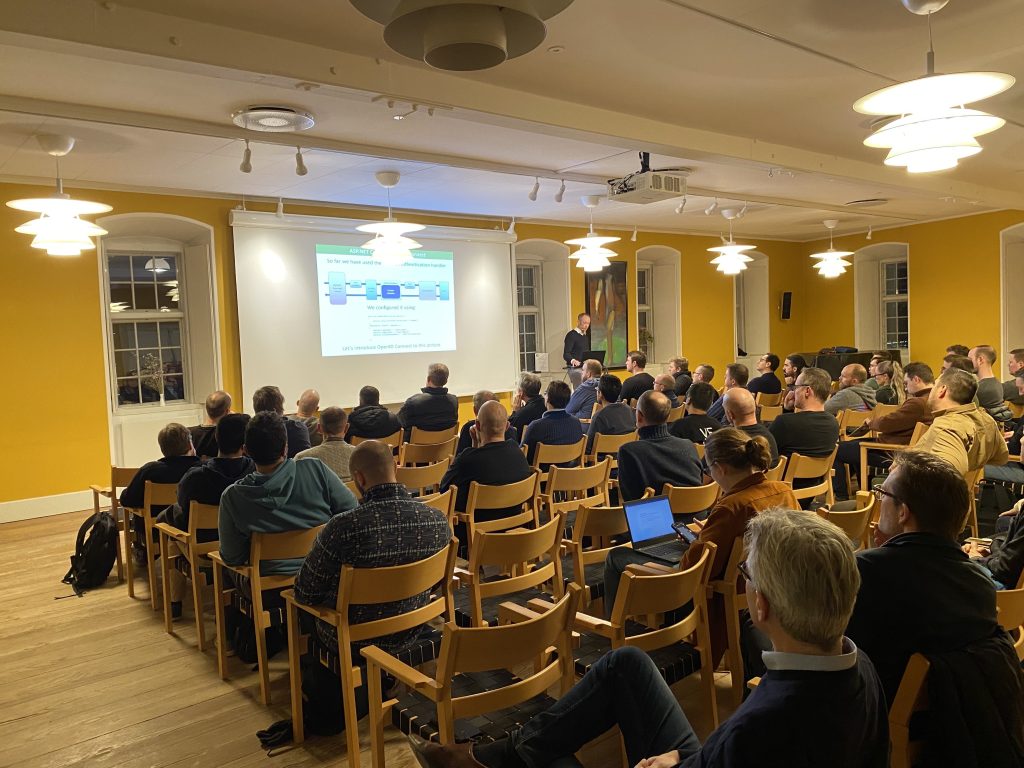
I frequently write about authentication and authorization on my blog. Some of the posts relevant to this course are:
Following the workshop, I offer ongoing support to help you apply what you’ve learned:
Hello! I’m Tore Nestenius, a senior software developer, trainer, and consultant with deep experience in security, authentication, OpenID Connect, and OAuth. I focus on helping developers and teams understand secure identity solutions in a clear and practical way.
Why I’m an expert in this field:
Connect with me on LinkedIn to stay updated on my latest blog posts, upcoming presentations, webinars, and more.

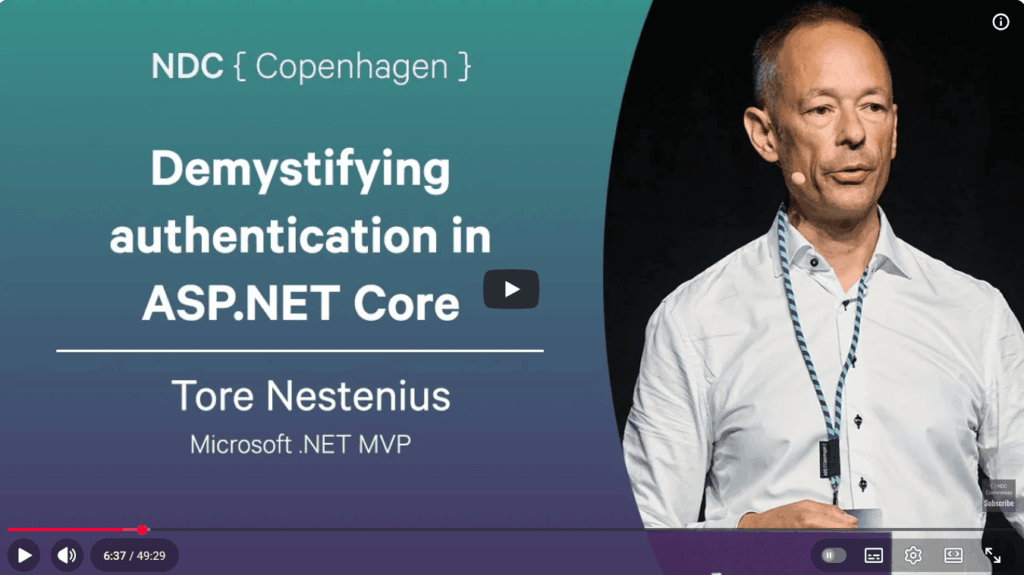
This course follows the same first principles approach presented by the course instructor at NDC Copenhagen, where authentication and authorization are explained from the ground up before introducing higher-level frameworks.
As a Microsoft MVP in .NET, an established entrepreneur, and a developer on .NET since it got started in 2002, Tore is a helpful and engaging guide for developers looking to build powerful, scalable, and secure applications.
Corporate trainings are arranged for a day and time that suits your team, while my online classes’ dates and times are arranged once there are enough individuals interested, ensuring a better price as well as a time that works for everyone.
The best workshops create an immersive experience. See the benefits that practical, attentive, and up-to-date training can offer today by putting me to the test!
I offer 30-45 minute workshops that can be customized to your team’s needs:
Feel free to get in touch using the details below, submitting a form on the contact page, or connect with me on LinkedIn!